A new garage door opener should start smoothly every time, run quietly over a bedroom, and stop the instant something crosses its path. Getting there takes more than hanging a motor from the ceiling. We help Elm Grove homeowners choose the right drive type and power, confirm the door itself is balanced, mount everything into solid framing, and set the force and travel limits so the opener protects your family and your door.
Chain drive openers move the trolley with a metal chain, much like a bicycle. They are durable and economical, and they suit detached garages where some noise does not matter. Belt drive openers use a reinforced rubber belt instead, which makes them noticeably quieter, a real benefit when the garage sits under or beside a bedroom, as it does in many Elm Grove split-levels and ranches. Screw drive openers turn a threaded steel rod and have few moving parts, but they can be sensitive to extreme temperature swings. For most attached garages, a belt drive is the practical favorite.
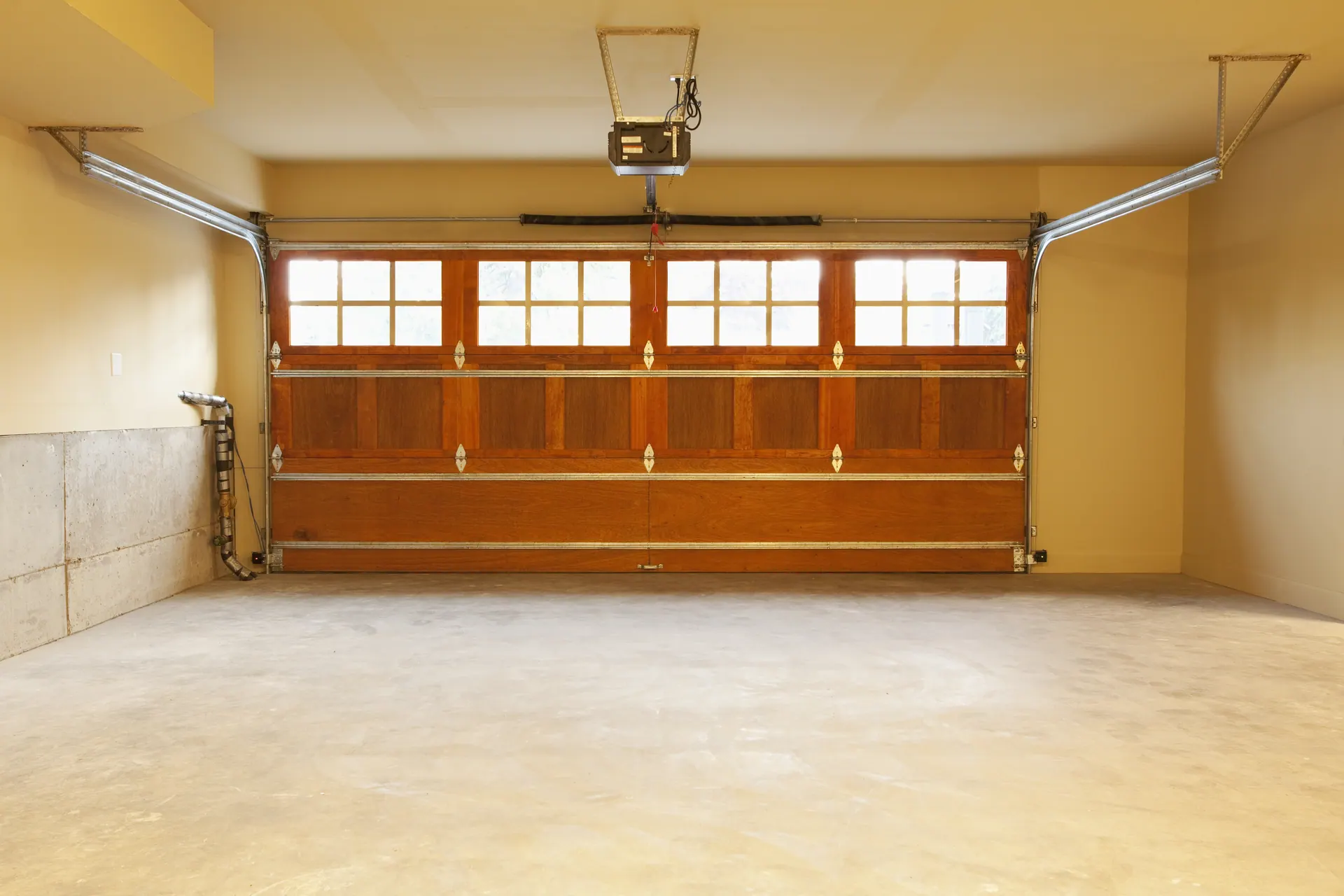
Wall mount openers, sometimes called jackshaft openers, take a different approach. Instead of a rail running down the middle of the ceiling, the motor mounts on the wall beside the door and turns the torsion bar directly. That frees the ceiling for storage racks, a car lift or a high-lift track, and it keeps the ceiling clean in a finished garage. Wall mount units need a torsion spring system, which most Elm Grove garages already have, and enough space beside the door, and many include an automatic deadbolt that locks the door when it closes. We check whether your garage meets those requirements before suggesting one.
Power matters, but bigger is not automatically better. Openers are often described by horsepower, such as one half or three quarter, or by an equivalent rating for newer DC motors. A properly balanced door is light enough that a modest opener lifts it easily, because the springs carry the weight. Heavier insulated, wood or oversized doors benefit from a stronger unit and smoother starts. DC motors offer soft start and soft stop, which reduces strain on the door and opener. We match the power to your actual Elm Grove door rather than selling the largest unit available.
Chain drive for durability and value
Belt drive for quiet attached garages
Wall mount to free ceiling space
DC motors with soft start, stop
Power matched to door weight
Rail extensions for 8 foot doors
Before We Mount
The Door Has to Be Ready First
An opener is only as good as the door it moves. Before installing, we disconnect the door from any old opener and test it by hand. A balanced door lifts with steady, moderate effort and stays put when released about halfway up. If it slams down or flies up, the springs are out of adjustment or worn, and a new opener would strain against that imbalance from the first day. Spring adjustment involves stored energy that can cause serious injury, so it is work for a trained technician. We correct balance problems first, so the new opener does not wear out early.
We also look at rollers, hinges, cables and track. Worn rollers with flat spots make a door shudder, and an opener's force setting may read that resistance as an obstruction and reverse. Bent track sections or loose hinges have the same effect. Many Elm Grove garages still have the original manual lock bars on the door, and those must be removed or disabled so the opener cannot drive against a locked door. Pull ropes are removed as well. Small fixes now make the installation smoother and help the new unit run for many years.
The door's top section takes the push and pull of the opener arm. On lightweight or older steel doors, that section can crack or bend over time, especially if the door has been forced against ice. We install a reinforcement bracket or strut across the top section where needed, then attach the opener arm to it. That spreads the load across the section instead of concentrating it on a few screws. It is an inexpensive detail that prevents a common type of damage we see on doors around Elm Grove.
Warning signs
Signs It Is Time for a New Opener
01
No safety sensors installed
Openers made before the early 1990s often lack photo eyes and modern auto-reverse. If your unit has no sensors near the floor, it does not meet current safety standards and should be replaced. This is especially important in households with children, pets or older adults.
02
Loud grinding or rattling
An opener that grinds, rattles or shakes the ceiling is usually wearing internally. Chain drive units are naturally louder, but a sudden change in sound often signals a stripped gear or worn sprocket. On an older unit, replacement may make more sense than repair.
03
Frequent repairs are adding up
If the opener has needed a new gear, logic board or sensors within the last couple of years, and it is well past its middle age, more failures are likely. Putting that money toward a new unit gives you better safety, security and features.
04
Remotes use fixed codes
Remotes with small switches inside the case use fixed codes that can be copied. Modern rolling code systems change the signal every time. If your remote opens with a screwdriver and shows a row of switches, the opener is overdue for an upgrade.
05
It struggles with the door
An opener that slows, stalls or reverses partway up may be underpowered or worn, but it may also be fighting an unbalanced door. We test the door by hand first. If the door is fine and the opener still struggles, a new unit is the answer.
06
You want quieter operation
If an old chain drive wakes the house every morning, a belt drive or wall mount opener with a DC motor can make a dramatic difference. Soft start and soft stop also reduce jolts that travel through the framing into nearby bedrooms.
Installation Details
Mounting, Wiring and Setting the Limits
The header bracket above the door has to anchor into solid wood framing, because it takes the full pulling force each time the door opens and closes. We locate the framing rather than relying on drywall, and we add blocking when the structure calls for it. The motor unit hangs from ceiling joists with sturdy angle iron, positioned so the rail runs straight and level. Opener manufacturers call for a grounded outlet close to the unit rather than an extension cord. If your Elm Grove garage does not have one in the right spot, we will let you know so an electrician can add it before install day.
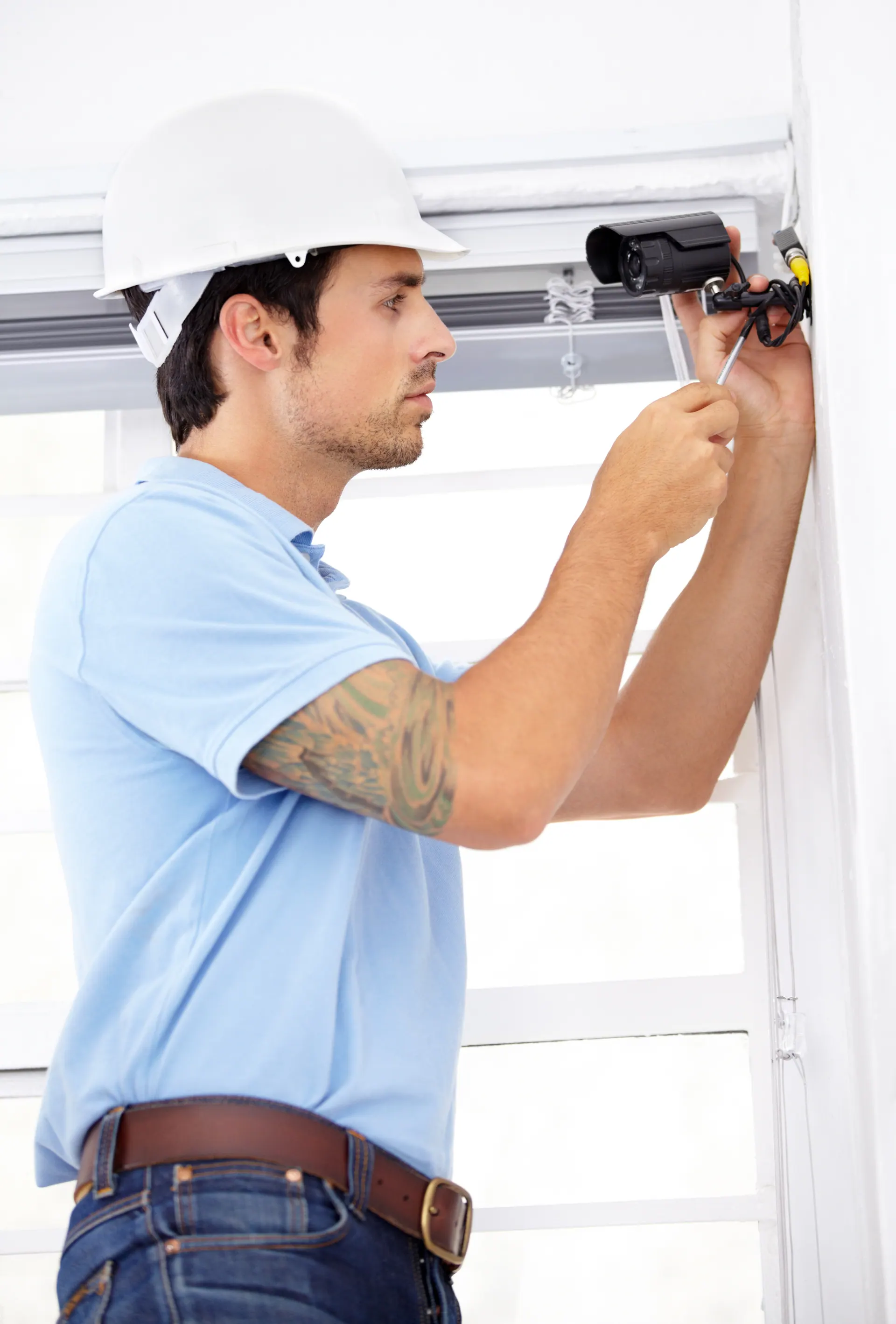
Safety sensors, often called photo eyes, mount on each side of the door no more than about 6 inches above the floor, facing each other across the opening. When the beam is broken, the door stops and reverses. We align the sensors, route and staple their wires neatly, and keep them out of the way of shovels and snow blowers. The wall control is mounted in sight of the door and at least 5 feet up, out of reach of young children. These placements come from safety standards, and we follow them on every installation.
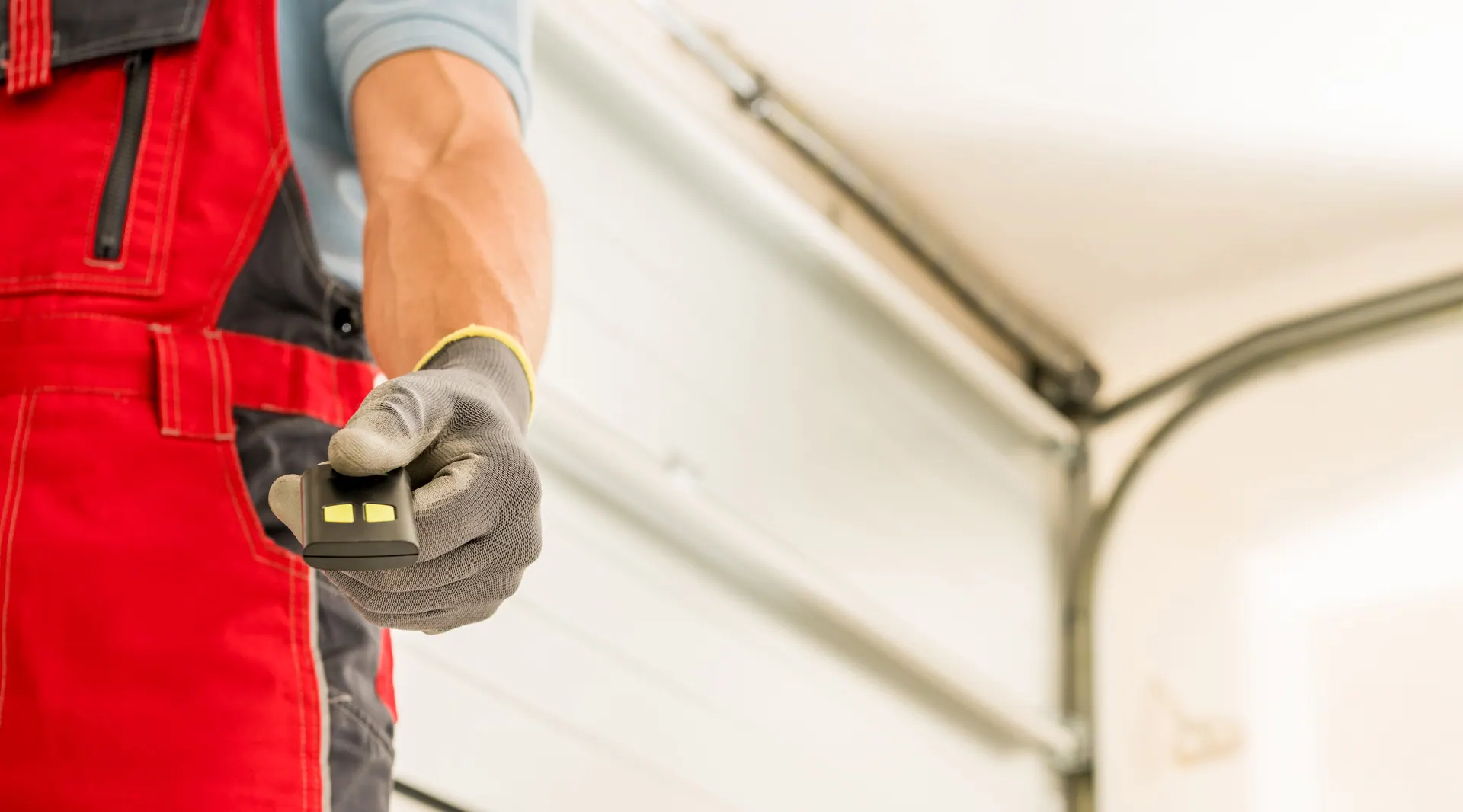
Once everything is mounted, we set the travel limits so the door stops at the right point at the top and closes fully onto the floor without crushing the seal. We set the force so the opener reverses if it meets resistance, then test it by placing an object under the door. We pair your remotes, keypad and vehicle buttons, and connect the opener to your Wi-Fi if you want phone control. Before we leave, we walk you through the emergency release, the lock mode and how to change a remote battery.
Header bracket anchored into solid framing
Sensors no higher than 6 inches
Wall button at least 5 feet up
Travel limits set to the floor
Force and auto-reverse tested on site
Remotes, keypad and car buttons paired
Modern Features
Features Worth Having on a New Opener
Today's openers do more than raise and lower a door. Built-in Wi-Fi lets you open, close and check the door from your phone, which is handy when you cannot remember whether you closed it on the way to work or when a neighbor needs to drop off a package. Many units can send an alert when the door opens or has been left up. Some can be set to close automatically after a chosen time, a feature that relies on working sensors and warning lights. We help you set up the app and test it before we leave.
Battery backup keeps the opener working through a power outage, which matters during summer storms and winter ice when Elm Grove loses power for a few hours. The battery lets you open and close the door several times before it runs down, so you are not stuck pulling the release cord and lifting the door by hand. Integrated LED lighting is bright and efficient. Keep in mind that some low quality LED bulbs added to older openers can interfere with remote signals, which is one reason we prefer the lighting built into a new unit.
Security has improved as well. Modern remotes use rolling codes that change every time you press the button, so a captured signal cannot be replayed to open your door. Older openers from the 1980s and early 1990s often used fixed codes set with small switches inside the remote, which are much easier to copy. A wireless keypad outside the door lets family members get in without a remote, and you can change the code whenever you like. If your current opener predates these features, upgrading closes a real gap in your Elm Grove home's security.
Our process
How we handle opener installation
1
Look at the garage
We check the door's balance, ceiling height, framing, outlet location and how you use the space. Then we recommend a drive type and power level that fit, explain the features available, and give you the price before work starts. Same-day installation is often possible when you call early.
2
Remove the old opener
We disconnect and take down the old unit, rail, sensors and wall button, and remove any manual locks or pull ropes from the door. We also tune rollers and hinges if needed. The old opener goes on our truck so you are not left with anything to dispose of.
3
Install and wire everything
We mount the header bracket, rail and motor unit, add a reinforcement bracket to the top section if needed, and install the sensors and wall control at the proper heights. Wiring is run neatly along walls and ceilings, away from where you park or store things.
4
Program, test and explain
We set the travel limits and force, test the sensors and auto-reverse, and pair your remotes, keypad, car buttons and phone app. Then we show you the emergency release and lock mode, answer your questions, and clean up before leaving your Elm Grove home.
Pricing, explained
What affects the cost
01
Drive type and motor
Chain drive openers are the most economical, belt drive units cost more for their quiet operation, and wall mount openers sit at the higher end. DC motors with soft start and stop typically cost more than basic AC units.
02
Features you choose
Built-in Wi-Fi, battery backup, integrated lighting, a wireless keypad and extra remotes all add to the price. Some features come standard on certain models. We explain which ones are worth it for your situation and which you can skip.
03
Door height and type
Doors taller than 7 feet need a rail extension, and heavy wood, insulated or oversized doors may call for a stronger unit. A door that needs spring adjustment, new rollers or a top section reinforcement adds to the work involved.
04
Garage setup
Missing outlets, weak framing at the header, finished ceilings, or very high ceilings that need longer hangers all affect installation time. We note these during the visit so they appear in your quote instead of showing up later.
Local to Elm Grove
Openers Built for Elm Grove Winters and Bedrooms Overhead
Many Elm Grove homes built in the 1950s through the 1970s have attached garages tucked under or beside bedrooms, so a noisy chain drive can be heard throughout the house on early mornings. That is why belt drive and wall mount openers are popular here. Winter adds its own demands. On subzero mornings, grease stiffens, the bottom seal can freeze to the concrete, and an opener with poorly set force may either strain or reverse halfway down. We set force and limits carefully and test them, so the door closes fully and still reverses when it should. Power outages from summer storms and ice on the big trees along village streets also make battery backup a sensible choice. When we install a new opener in Elm Grove, we also look at sensor placement, since snow piles and blown leaves near the floor can block the beam during the seasons.
Belt drive openers with DC motors are generally the quietest ceiling mounted option, because the rubber belt runs smoothly and the motor ramps up and down gently. Wall mount openers are also quiet and remove the rail from the ceiling entirely. Keep in mind that noise also comes from the door itself, so worn rollers and dry hinges can make even a new opener sound loud.
Can I install a new opener myself?
Some homeowners do, but there are real risks. The door must be properly balanced first, and spring adjustment is dangerous work for a trained technician. Sensors and the wall control have to be placed correctly, and force settings must be tested so the door reverses on contact. If anything about the door feels heavy or uneven, have it inspected before mounting a new opener.
Will a new opener work with my car's built-in buttons?
Most newer vehicles can be programmed to work with current openers, though some older cars and certain opener models need a small adapter to communicate. We test the pairing during installation when your vehicle is available. If your car does not support your new opener directly, we can explain the adapter options or suggest a visor remote instead, which works just as well for most Elm Grove drivers.
How long does opener installation take?
A standard ceiling mounted opener replacement usually takes a few hours, including removing the old unit, testing the door, mounting and programming. Wall mount openers or installations that need door repairs, a rail extension or extra framing can take longer. We let you know what to expect when we quote, and same-day installation is often possible when you call early.
Do I need a stronger opener for a heavier door?
Not necessarily. Springs carry the weight of a balanced door, so the opener mainly guides it. That said, very heavy wood or oversized doors benefit from a more powerful unit that starts smoothly and runs without strain. We weigh the door's balance and size before recommending a model, and we fix any spring problems first rather than covering them with extra power.
What happens to the opener during a power outage?
Without battery backup, the opener will not run until power returns. You can pull the red emergency release cord and lift the door by hand, provided the springs are working. Battery backup models keep running for several cycles during an outage. Remember to reconnect the trolley afterward by running the opener, so the door is locked in place again before you leave home.
Tell us about your door and garage, and we will recommend an opener that fits. We quote the price before work starts and can often install the same day when you call early.