Garage door tracks look simple, but they guide hundreds of pounds of door through a curve every time it opens. When a track gets bent by a car bumper, pulled loose from the wall, or eaten by rust from years of road salt, the door can scrape, jerk or jump its rollers. We repair and replace tracks for Elm Grove homes, set them plumb and parallel, and make sure the door travels smoothly from floor to ceiling.
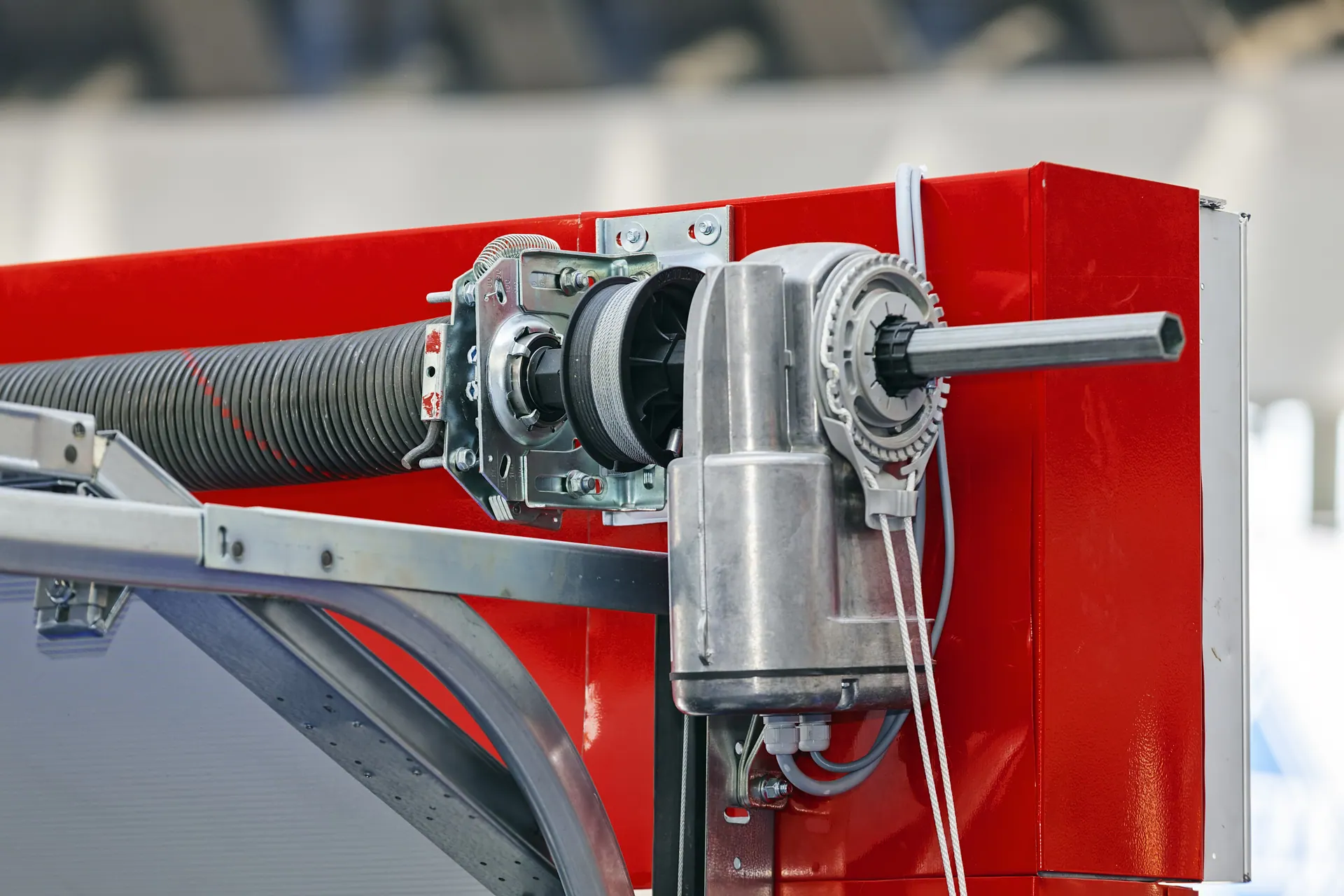
A residential sectional door rides on two track assemblies, one on each side. Each assembly has a vertical track fastened to the wall beside the opening, a curved section called the radius, and a horizontal track that runs back toward the ceiling, hung from the joists with rear angle iron. The rollers on each section ride inside these rails. As long as the tracks are straight, properly spaced and firmly mounted, the door glides. When any part of that geometry is off, you hear it and feel it right away.
The most common damage we see is a vertical track bent inward near the floor, usually from a car, mower or snowblower clipping it. Next comes loose or missing lag screws that let the track shift away from the jamb, followed by horizontal tracks sagging because the rear hangers have bent or worked loose. Rust is a quieter problem: salty slush splashes the lower track for years until the steel thins, flakes and eventually loses its shape. Each of these creates friction or gaps that the rollers cannot handle well.
Some track problems are fixed by realigning and refastening, while others need new steel. A gently bowed track can sometimes be eased back, but a kinked or creased track never truly straightens, because the metal has been permanently deformed. Rollers will catch on that spot every cycle. We look at the bend, the condition of the steel and the mounting points, and tell you whether adjustment, a partial track replacement, or a full new track set is the sound fix. That way you pay for the repair that lasts. No guesswork, no upselling.
Vertical tracks bent near the floor
Loose or stripped track brackets
Sagging horizontal tracks overhead
Rusted, thinned lower track sections
Rollers popping out of the rail
Tracks spaced too wide or narrow
Track types
Matching the track to your door and garage
Tracks are not one size fits all. Residential doors typically use two inch track, while heavier or commercial style doors may use three inch. The radius is just as important: twelve and fifteen inch radius curves are common, and the curve has to match how the door was designed to transition from vertical to horizontal. Using the wrong radius can leave the top section hanging awkwardly or binding at the bend, so we measure what you have before ordering anything new. Matching the radius also keeps the opener from straining as the door makes the turn.
Lift style also matters. A standard lift door suits most garages with typical headroom above the opening. Low headroom garages, common in some older attached garages and basement tuck unders, use a double track system at the top so the door can turn tighter. High lift and vertical lift tracks go the other way, carrying the door partway or fully up the wall in garages with tall ceilings. Each style requires its own track, spring arrangement and cable setup, and they are not interchangeable. If your garage was converted or the ceiling was changed, we confirm which system fits now.
Track gauge, meaning the thickness of the steel, varies too. Lighter gauge track is fine for a single layer door, while a heavy insulated or wood door benefits from thicker steel that resists flexing. Mounting method differs as well, with some tracks attached through continuous angle and others with individual jamb brackets. When we replace tracks, we match or improve the gauge for your door weight so the new assembly stays rigid for years rather than drifting out of line again. It is a detail most people never see, but it shows up in how the door runs.
Warning signs
Signs your tracks need attention
01
Door scrapes or grinds
A grinding or scraping sound as the door moves usually means a roller is rubbing against a bent or misaligned track. The noise often happens at the same spot every cycle, and it tends to get louder as the roller wears a groove into the damaged section of steel.
02
Visible bend or kink
Stand inside and sight down each vertical track. A track that bows inward, has a crease, or is pushed toward the door near the floor needs attention. Even a small kink can catch a roller and stall the door, or force it out of the rail entirely.
03
Gap between track and rollers
When tracks drift apart, rollers can sit at the very edge of the rail. When they pinch together, the door binds. Either condition stresses hinges and the opener. If you can see the roller stem shifting in and out, the spacing is likely off.
04
Door jerks or hesitates
A door that stutters, pauses or lurches during travel is fighting something. Misaligned tracks are a common cause, especially at the curve where the door turns from vertical to horizontal. The opener may reverse because it senses resistance and treats it as an obstruction.
05
Loose or missing brackets
Wiggle the brackets holding the vertical tracks to the wall. If they move, if screws are missing, or if the wood around them has split, the track can shift under load. Loose mounting is often the first step toward a bent track or a derailed door.
06
Rust and flaking steel
Orange rust on the lower part of the tracks, especially with flaking or pitting, means the steel is thinning. Salt and standing water speed this up. Weakened track can deform under normal door weight, so heavy corrosion is a sign replacement is coming.
The replacement
How we replace and align garage door tracks
Track replacement starts with making the door safe to work on. With the door closed and spring tension controlled, the door cannot drop or spring upward while rollers are out of the rails. Depending on the job, we may need to unwind torsion springs or release extension spring tension before removing a track. Those steps involve stored energy that can injure someone in a split second, which is why we never recommend homeowners unbolt their own tracks, even when the problem looks like a few loose screws. We handle that part with proper tools.
With the old track removed, we install the new assembly and set the vertical tracks plumb using a level, with the correct gap between the track and the door edge so the rollers turn freely without letting the door wander side to side. The horizontal tracks get leveled and parallel, with a slight rise toward the back so the door stays open on its own. Rear hangers go into solid framing, not just drywall or a thin board, and we add sway bracing where the span calls for it. Nothing is left hanging from drywall.
Fasteners make a big difference. Track brackets need lag screws driven into the framing beside the opening, and loose or undersized screws are a common reason tracks drift. After everything is tight, we run the door through several full cycles by hand, watching each roller pass through the radius. Then we check spring balance, run the opener, adjust limits and force settings, and test the photo eyes and auto reverse before we call it finished. You will see the door run before we pack up, and we will point out anything else worth watching.
Spring tension controlled before work
Vertical tracks set plumb
Horizontal tracks leveled and parallel
Lag screws into solid framing
Rollers checked through the radius
Opener limits and force readjusted
Prevention
Keeping your tracks straight and quiet
Most track damage is preventable with a little awareness. Leave room around the bottom of the vertical tracks when parking, storing bikes or swinging the snowblower around, since that lower stretch is where nearly all impact bends happen. If you have a tight attached garage, a simple wheel stop or tennis ball hung from the ceiling can keep bumpers well clear of the rails. It is a small habit that saves a service call. Teaching kids to keep bikes and sleds away from the rails helps too. A track bent by a careless push is just as bent as one hit by a car.
Avoid greasing the inside of the tracks. It seems logical, but grease collects grit, leaves and dust and turns into a sticky paste that makes rollers skid instead of roll. Clean the tracks with a dry rag instead, and lubricate the roller bearings and hinges with a garage door spray rather than the rails themselves. Wipe salt residue off the lower track during winter, especially if your door sits close to where wet vehicles park. Those few minutes of cleaning keep rust from getting a head start on the steel.
Every few months, look along each vertical track from the floor to the curve. You should see a straight line, firm brackets and no gaps opening between the track and the wall. Listen for scraping or a thump as the door passes the radius. If anything looks off, call us before it gets worse. Do not try to hammer a bent track straight or loosen the brackets yourself while the door is under spring load. A quick call costs less than a derailed door. Catching a loose bracket early often means a short, simple repair instead of new steel.
Our process
How we handle track replacement
1
Diagnose the cause
We inspect both track assemblies, the mounting brackets, rear hangers and rollers. We also look for the reason the track failed, such as an impact, a sagging hanger, worn rollers or an unbalanced door, so the same problem does not return a few months later.
2
Explain your options
Some tracks can be realigned and refastened, while others need partial or full replacement. We show you what we found, explain which approach fits, and give you a clear quote before any work starts. Common track sections and brackets are often on the truck.
3
Replace and align
With spring tension safely controlled, we remove the damaged track, install the new assembly, and set it plumb, level and correctly spaced. Brackets get lagged into solid framing, rear hangers are secured, and we replace any rollers that were damaged by the bad track.
4
Test the full system
We run the door by hand and with the opener through several cycles, check balance, and adjust limits and force. We test the safety sensors and auto reverse, lubricate the moving hardware, and clean up the work area before we leave your garage.
Pricing, explained
What affects the cost
01
Extent of damage
Realigning and refastening a track costs much less than replacing it. A single bent vertical track is a smaller job than replacing both sides, and replacing the full assembly including horizontal tracks and radius sections is the largest track job.
02
Lift style and size
Standard lift tracks for a single car door are the simplest. Double wide doors, low headroom double track systems, high lift and vertical lift setups all use more steel, more specialized parts and more labor to install and align correctly.
03
Related damage
A hit hard enough to bend a track often damages rollers, hinges, the bottom section or the cables as well. Those parts are quoted separately so you can see exactly what is needed and why, rather than paying for a lumped estimate.
04
Mounting surface condition
If the wood framing beside the opening has split or rotted, the brackets have nothing solid to grip. Reinforcing or replacing the jamb backing adds to the job, but skipping it means the new track will loosen just like the old one did.
Local to Elm Grove
Tracks, salt and tight garages in Elm Grove
Elm Grove has plenty of attached garages built during the postwar boom of the 1950s and 1960s, and many were sized for smaller cars. Pull a modern SUV into one of those garages and the vertical tracks sit just inches from the mirrors and bumper, so bent lower tracks are a regular call for us. Winter makes it worse. Snow and slush ride in on tires, road salt from Bluemound Road and Watertown Plank Road drips onto the floor, and the lowest foot of each track sits in that brine for months. Over the years the steel rusts from the bottom up. Fall brings its own issue, as leaves from the village's mature trees blow in and collect in the track bottoms. We check for all of this on every visit and suggest simple habits that help tracks last longer in Elm Grove conditions.
A track with a slight bow can sometimes be eased back into line and refastened. A track with a sharp kink, crease or crushed section should be replaced, because the steel has been permanently deformed and rollers will keep catching on that spot. We inspect the damage and tell you honestly whether straightening will hold or whether new track is the safer choice for your door.
Should I use my garage door if the track is bent?
It is best not to. Running a door on a bent track can force rollers out of the rail, damage sections, or cause the door to hang crooked and fall. If the door is closed, leave it closed and avoid the opener. If it is stuck open, keep people and cars out from under it and call for service in Elm Grove.
Do you replace one track or both?
It depends on the damage. If only one vertical track was bent by an impact and the rest of the system is in good shape, replacing that one section is often enough. If both sides are rusted, the horizontal tracks sag, or the hardware is old and mismatched, replacing the full set gives you a cleaner, more reliable result. Our goal is a track system that runs true from end to end.
Why does my garage door keep coming off the track?
Doors derail for a few common reasons: tracks spaced too far apart, a bent section that lets a roller escape, worn or broken rollers, loose brackets, or a broken cable that lets one side drop. We find which one is causing it in your garage and fix the root cause, not just push the rollers back in. Pushing rollers back in without a fix only buys a little time.
Can I lubricate my garage door tracks?
Clean the tracks, but do not grease them. Grease inside the rail traps dirt and leaves, which makes rollers slide instead of roll. Wipe the tracks with a dry cloth and use a garage door lubricant on the roller bearings, hinges and springs. That keeps the door quiet without creating a sticky buildup in the track channel. Skip household oils, which can gum up in cold weather.
How long does track replacement take?
Most track repairs and single side replacements are finished in one visit, often within a couple of hours. Full track replacement on a double door or a low headroom system can take longer. We carry common track pieces and brackets on the truck, which means many Elm Grove track jobs are done the same day we come out. We clean up and haul away the old steel.
If your door scrapes, sags or has jumped its rollers, leave it closed and give us a call. We will diagnose the track, quote the fix before starting, and often finish the same day.