Same-day garage door service in Elm Grove, WI 53122Mon–Sat 7am–7pm·(262) 000-0000

Fix one section

Garage Door Panel Replacement in Elm Grove, WI

A backed-into bottom section or a panel split by a hard winter does not always mean a whole new door. In Elm Grove, plenty of sectional doors are good candidates for single panel replacement when the rest of the door is sound. We identify your door's maker and model, source a matching section, and swap it in so the door runs straight, seals at the floor, and looks right from the street.

Quote for panel replacement

Fast reply during business hours. No obligation.

No obligation. Price confirmed before any work starts.

  • Matched sectionsSame profile, color and gauge
  • Honest assessmentWe tell you if replacement wins
  • Balanced afterwardSprings adjusted for new weight
  • Clean finishOld panel hauled away
Panel Replacement in Elm Grove, WI

When one section fails

Replacing a damaged panel without replacing the door

A sectional garage door is built from four or five horizontal sections joined by hinges, with rollers riding in the tracks at each joint. Because each section is its own piece, a single damaged one can often be removed and replaced. That is useful when a car nudged the bottom section, a snowblower chute caught the middle, or a basketball season left a row of dents. The key questions are whether a matching section still exists and whether the rest of the door is healthy enough to justify the repair.

Panel damage is more than cosmetic. A section that has bowed inward can pinch rollers, bind in the track and strain the opener every time the door moves. A cracked steel skin lets water reach the insulation core, where it can freeze and push the skin further out. A broken stile or end cap weakens the hinge mounting points, so the next impact may tear a hinge loose entirely. Replacing the bad section restores the door's strength along with its looks. Ignoring a damaged section usually means paying for more repairs later, since the extra strain spreads to hinges, rollers and the opener.

Not every door is a good candidate. If the model was discontinued years ago, or the color has faded so far that a new section would stand out like a patch, we will say so plainly. Sometimes a reinforcing strut, a hinge repair or straightening a minor bend is enough. Other times, especially when several sections are damaged on an older, uninsulated door, a full replacement makes more sense. You get the facts and the choice. Our goal is the repair that makes sense for your door, not the biggest invoice.

  • Bottom sections bumped by vehicles
  • Dented middle sections from impacts
  • Cracked or split steel skins
  • Rotted bottom panels on wood doors
  • Torn hinge mounting areas
  • Bowed sections that bind in track

Finding a match

How we source the right replacement section

Matching a section starts with identification. Most manufacturers place a label on the inside of a section or on the end stile, listing the model, date and sometimes the color code. When the sticker is gone, we measure the door width, section height, steel thickness, panel pattern and insulation type, then compare the embossing and the joint profile. A raised panel short door from one maker can look nearly identical to another brand from the driveway, yet the joints will not mate together. That is why we confirm the profile before ordering anything, rather than relying on a photo or a guess.

Section height matters as much as pattern. Doors commonly use 18, 21 or 24 inch sections, and the overall door height determines which combination your door uses. The replacement must also match the joint style, since tongue and groove and pinch resistant joints do not interlock with each other. For insulated doors we match the core, whether polystyrene or injected polyurethane, so the new section has the same weight and thermal behavior as its neighbors. A lighter or heavier section changes how the door balances, so matching the core keeps the springs doing the job they were sized for.

Color is the last piece. Factory white, almond and sandtone are usually close, but a south facing door that has baked for fifteen summers will have faded. We look at your door in daylight and talk through how noticeable the difference may be. Some homeowners choose to paint the whole door afterward for a uniform finish. Wood and wood composite doors are their own case, since sections are often built to order and need finishing to match. We would rather set those expectations at the start than surprise you on installation day.

Warning signs

Signs a panel needs replacing

01

Visible dent or crease

A sharp crease in the steel skin usually means the metal has stretched and will not pop back. Creases near a hinge or across a stile are more serious than a shallow ding in the middle of a panel, because they weaken the structure that holds the door together.

02

Section bowed inward

If you stand inside and see a section bending toward you, the door may have been hit or the opener may have pushed against an obstruction. A bowed section can pull rollers out of the track and cause the door to bind or come off its track.

03

Cracks along the joints

Cracks running along the top or bottom edge of a section often start at the joint where sections meet. Cold weather makes thin steel brittle at those bends, and repeated flexing widens the crack until water and drafts come through each time the door closes.

04

Rotted or soft wood

On wood doors, the bottom section soaks up snowmelt and splash from the driveway. Soft spots, peeling paint and dark staining along the lower edge point to rot that can spread into the frame of the section and loosen the bottom bracket screws.

05

Hinge pulling from section

Look for hinges that have torn loose, screws that spin without biting, or metal that has cracked around a hinge. Once the attachment point fails, the door can twist as it travels, and the damage tends to spread to the neighboring sections quickly.

06

Gaps when door closes

A damaged section can keep the joints from closing fully, leaving light visible between sections or along the bottom. Those gaps let cold air, snow and mice into the garage, and they usually signal that the section has bent out of plane.

Panel Replacement detail

On installation day

What a proper panel swap actually involves

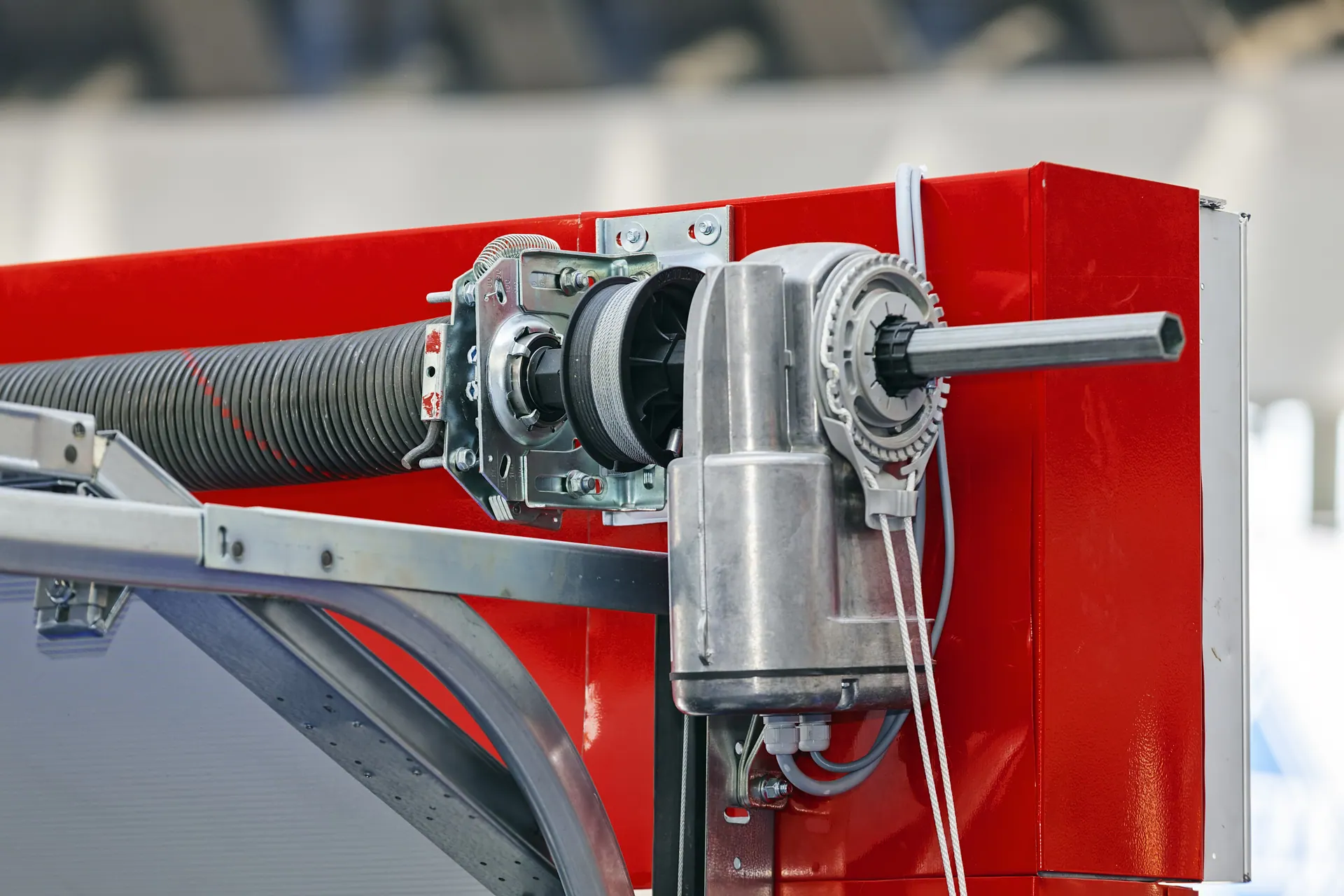
Swapping a section is not a matter of unbolting one piece and dropping in another. The door is under spring tension the entire time, and the bottom section carries the cable attachment brackets that connect to that tension. Before any section comes off, the springs have to be safely unwound or the door secured so the load cannot release suddenly. This is exactly why panel work belongs to trained technicians with winding bars and the right clamps, not to a weekend project. A loose cable or a spring that lets go can cause serious injury in an instant.

Once tension is controlled, we remove hinges, rollers and any struts from the damaged section, lift it out, and set the new one in place. Hinges, rollers and brackets are transferred or replaced depending on their condition. On a bottom section, we fit a new bottom retainer and weather seal since the old ones rarely survive the move. Middle sections need careful alignment so the joints close fully and the door does not develop a twist. We also check that the new section sits square with the ones above and below it, since even a slight offset shows up as uneven gaps along the edges.

After the section is installed, we rewind the springs and check the balance, because a new section rarely weighs exactly what the old one did. A door that has gained a few pounds will feel heavy and push the opener harder. We lift the door by hand to mid height and confirm it stays put, then run it with the opener, test the photo eye safety sensors and the auto reverse, and adjust the travel limits. Before we leave, we walk you through what was done and point out anything else we noticed on the door.

  • Spring tension secured before disassembly
  • Hinges and rollers inspected or replaced
  • New bottom seal on bottom sections
  • Joints aligned to close fully
  • Springs rebalanced for new weight
  • Safety sensors and auto reverse tested

Repair or replace

Deciding between a panel and a whole new door

Single section replacement makes the most sense on a door that is reasonably modern, mechanically sound and still made in the same pattern. If the door is ten years old, the springs are fine, the tracks are straight and only one section is damaged, a new section is usually the practical move. You keep a door that otherwise works and avoid the larger project of replacing everything. It also keeps the project small, with one visit for measuring and one for installation. For many Elm Grove households, that is the simplest and least disruptive way to get the garage back to normal after an accident.

The math changes when two or three sections need work, when the door is a single layer steel model from decades ago, or when the springs and rollers are also near the end of their life. Each section adds parts and labor, and at some point a new insulated door with fresh hardware becomes the better value. We will lay out both options so you can compare them side by side rather than guess. Neither choice is wrong, and we explain the tradeoffs in plain terms. You will know what each path costs in parts, labor and time before you decide anything.

There is also the question of appearance. A new section on an older door may stand out in sheen or tone even when the color code matches, simply because the old paint has weathered. For a door that faces the street on a busy road like Watertown Plank, that might matter. For a side load garage hidden behind the house, it may not. Your priorities guide the recommendation, and we respect whichever path you pick. We can also show you sample colors or photos so you can picture the finished result before you commit.

Our process

How we handle panel replacement

  1. 1

    Inspect and identify

    We look at the damage, read any manufacturer labels, and measure section height, width, thickness and pattern. We also check springs, rollers and tracks so you know whether the rest of the door is worth keeping before you commit to a new section.

  2. 2

    Quote and order

    You get a clear quote before any work begins, covering the section, hardware and labor. Once you approve, we order the matching section. Some common sections are stocked locally, while others ship from the manufacturer, and we give you a realistic timeline for arrival.

  3. 3

    Install the section

    On the scheduled day, we secure spring tension, remove the damaged section, and set the new one in place with fresh or transferred hinges and rollers. Bottom sections get a new retainer and seal. We align the joints so the door closes evenly.

  4. 4

    Balance and test

    We rewind and balance the springs for the new weight, then run the door by hand and with the opener. Safety sensors and auto reverse get tested, limits get adjusted, and we haul away the old section and clean up before leaving.

Pricing, explained

What affects the cost

  1. 01

    Which section is damaged

    Bottom sections carry the cable brackets and weather seal, so they need extra parts and labor. Middle and top sections are simpler in that respect, though a top section may need the opener arm bracket moved and the top fixture reattached.

  2. 02

    Door construction

    Single layer steel sections cost less than insulated sandwich sections with a backing skin. Wood, wood composite and full view aluminum glass sections are a different category entirely, often built to order and requiring more careful handling during installation and finishing.

  3. 03

    Availability of the match

    A current production section ships quickly at standard pricing. An older or less common pattern may need special ordering, may only be available in a close substitute, or may not exist at all, which shifts the decision toward a new door.

  4. 04

    Related hardware condition

    If hinges are cracked, rollers are worn, or springs are near the end of their cycles, it often makes sense to address them during the same visit since the door is already apart. We list those items separately so you can decide.

Autumn scenery around Elm Grove, Wisconsin

Local to Elm Grove

Why Elm Grove bottom panels take a beating

Many Elm Grove homes have long driveways lined with mature trees, and that shade keeps the bottom of a garage door damp well after a rain. Add a winter of plowed snow banked against the door, road salt tracked in on tires, and freeze thaw cycles from November through March, and the bottom section ages faster than the rest. On the 1950s through 1970s ranches and split levels around Juneau Boulevard and Elm Grove Road, tight turns into attached garages also make bumped panels common. When we replace a bottom section here, we pay attention to the weather seal and retainer, and we suggest keeping leaves and slush cleared from the threshold. A section that stays dry and sealed lasts far longer, whether your door faces a quiet cul de sac or a busier street near the village center.

(262) 000-0000

FAQ

Panel Replacement questions

Have a question we didn't cover? Call us and ask. Honest answers, no pressure.

(262) 000-0000
Can you replace just one panel on my garage door?

Yes, on most sectional doors a single damaged section can be replaced, as long as a matching section is still available. We identify the manufacturer and model, confirm the section height, pattern and joint style, and check the rest of the door. If a match exists and the door is otherwise sound, a single section swap is usually a practical repair for Elm Grove homeowners.

Will the new panel match the color of my door?

The factory color code will match, but your existing door may have faded from years of sun and weather. Doors that face south or west often show the most difference. We look at your door in daylight and give you an honest sense of how close it will be. Some homeowners choose to paint the whole door afterward so every section looks uniform.

Is it safe to replace a garage door panel myself?

We strongly advise against it. The door is held by springs under heavy tension, and the bottom section is attached directly to the lift cables. Removing a section without properly releasing that tension can cause the door or the springs to move violently. Panel swaps should be handled by trained technicians who have the proper winding bars, clamps and experience.

How long does panel replacement take?

The installation itself is usually done in a single visit of a couple of hours. The longer part is often waiting for the section to arrive, since many panels are ordered to match a specific model, color and size. We give you a realistic timeline when we quote, and we can often secure a damaged door so it stays usable while you wait.

What if my door model has been discontinued?

If the exact section is no longer made, we look for a compatible section from the same manufacturer with a matching joint profile and pattern. When nothing compatible exists, mixing sections from different designs usually looks wrong and may not seal or travel properly. In that case, we will walk you through replacement options so you can choose a new door that fits your home.

Can a dented panel be repaired instead of replaced?

Small, shallow dings sometimes can be eased out, and a mildly bent section can be reinforced with a strut. Sharp creases, cracked skins and torn hinge areas generally cannot be fixed reliably, because the steel has stretched or split. We assess the damage in person and tell you whether a repair will hold or whether replacement is the better long term fix.

Elm Grove, WI

Get your damaged panel assessed

Tell us what happened to the section and we will come out, identify your door, and quote the replacement before any work starts. Same day visits are often available in Elm Grove when you call early.

Elm Grove · Brookfield · Wauwatosa · New Berlin

Garage door trouble? We're close by.

Call now · (262) 000-0000