When a garage door starts grinding, shuddering, stopping halfway or refusing to move, the cause is usually one worn part putting strain on everything else. Elm Grove Garage Door finds that part, explains what we see in plain language, and quotes the price before any work starts. We repair doors across Elm Grove and nearby suburbs, from 1950s ranch garages off Juneau Boulevard to newer three-car attached garages, and we carry common parts on the truck.
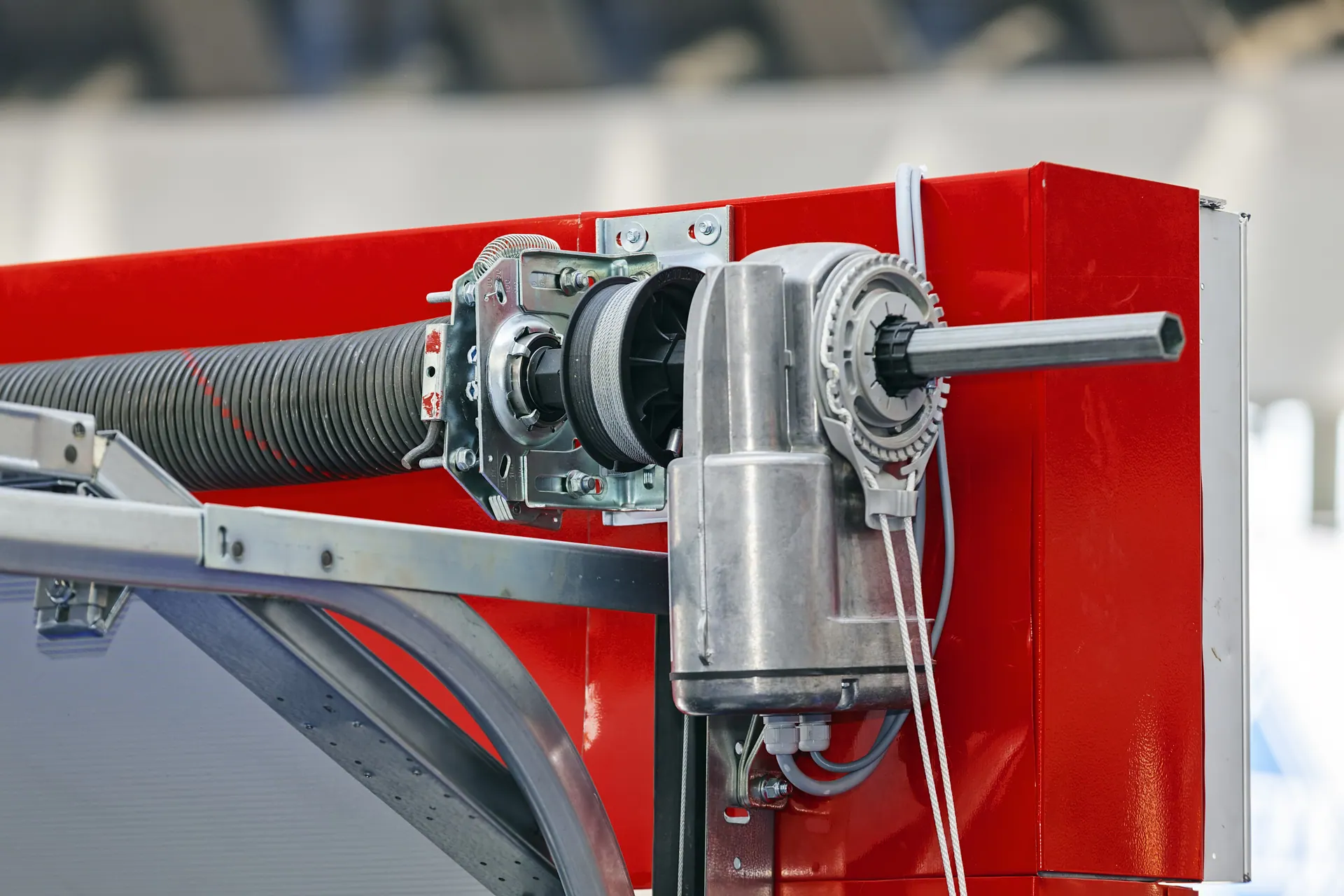
A residential garage door is a balanced system. Springs carry almost all of the weight, cables transfer that force to the bottom corners, rollers guide the sections through the tracks, and the opener simply nudges the load up and down. When one piece wears out, the others start working harder. A flat-spotted roller makes the opener strain, a stretched cable lets one side drop, and a tired spring turns a light door into a dead weight. That chain reaction is why we look at the whole door, not just the part that made the noise.
Most repair calls we see in Elm Grove fall into a handful of patterns. Doors that reverse for no reason often have misaligned or dirty photo eyes. Doors that stop a foot off the floor may have a limit setting drifting or a track bent by a bumper. Doors that sound like a freight train usually have dry hinges and worn steel rollers. Doors that hang crooked in the opening often point to a cable problem. Naming the pattern quickly lets us test the likely cause first and keep the visit efficient.
We work on sectional doors made of steel, wood, aluminum and composite, single and double widths, with torsion or extension spring systems. We also handle the opener side: chain, belt and screw drive units, wall buttons, keypads, remotes and the safety sensors near the floor. If a repair makes sense, we tell you what it will fix and what it will not. If the door is near the end of its useful life, we say that too, so you can make a sensible choice. Whatever the brand or age, the goal is the same: a door that runs smoothly, quietly and safely every day.
Broken torsion and extension springs
Frayed, slipped or snapped lift cables
Worn, cracked or noisy rollers
Bent tracks and loose track brackets
Cracked hinges and pulled end stiles
Opener, sensor and remote problems
Repair or Replace
When a Repair Makes Sense, and When It Does Not
Most garage doors can be repaired, and in many cases repair is clearly the right call. Springs, cables, rollers, hinges, weatherstripping and opener parts are all designed to be replaced over the life of a door. Swapping them restores smooth, quiet operation at a fraction of what a new door costs. A twenty-year-old steel door with sound panels and a fresh set of springs can keep working well for many more seasons, especially if it gets an annual tune-up. For many Elm Grove households, that kind of targeted repair is the most sensible use of money.
Replacement starts to make sense when the panels themselves are failing. Steel sections that are rusted through along the bottom, wood sections with rot at the joints, or panels creased from a vehicle impact can sometimes be swapped individually, but matching an older or discontinued design is often difficult. When several big repairs stack up on a door that is also uninsulated and drafty, putting that money toward a new insulated door usually gives a better result over time. Doors that have warped in their frames or need constant adjustment fall into this group as well.
We give you the honest picture either way. On the visit we point out what is worn, what is still in good shape, and roughly how much life the door has left. You get a repair quote first, and if replacement is worth considering, we explain why in terms of the specific door in front of us. There is no pressure to decide on the spot. Plenty of homeowners repair now and plan a new door for a later season, and that is a perfectly reasonable approach. Our job is to give you the facts and let you decide.
Warning signs
Signs Your Door Needs a Repair Visit
01
Grinding or Popping Noises
Loud grinding, squealing or popping usually means dry hinges, worn roller bearings or a roller binding in the track. Noise is the earliest warning sign, and catching it early often means a small hardware repair instead of a larger one after the worn part finally lets go.
02
Door Reverses Before Closing
A door that touches down and pops back up may have a misaligned photo eye, a travel limit that has drifted, or a force setting that is too sensitive. It can also mean the door is binding somewhere and the opener is reading that resistance as an obstruction.
03
Uneven Gap at the Floor
If one side of the door touches the floor before the other, a cable may be stretched or slipping on its drum. A crooked door puts uneven strain on rollers and tracks, so it is worth having it looked at before the door jams in the opening.
04
Door Feels Heavy by Hand
With the opener disconnected, a balanced door should lift with modest effort and stay put halfway. A door that feels like dead weight or slams shut has lost spring tension, and the opener is now lifting far more weight than it was built for.
05
Jerky or Shaky Movement
Shuddering, stopping and starting, or visible wobble as the door travels often points to worn rollers, loose hinges or a track that has shifted out of plumb. Left alone, that vibration loosens more fasteners and speeds up wear on the opener.
06
Gaps Letting Light In
Daylight showing along the bottom or sides means the bottom seal or perimeter weatherstripping has torn, flattened or pulled loose. In a Wisconsin winter that gap lets in cold air, snow melt and mice, and it can also hint at a door that is no longer square.
Every Repair Visit
What We Check Before We Call It Finished
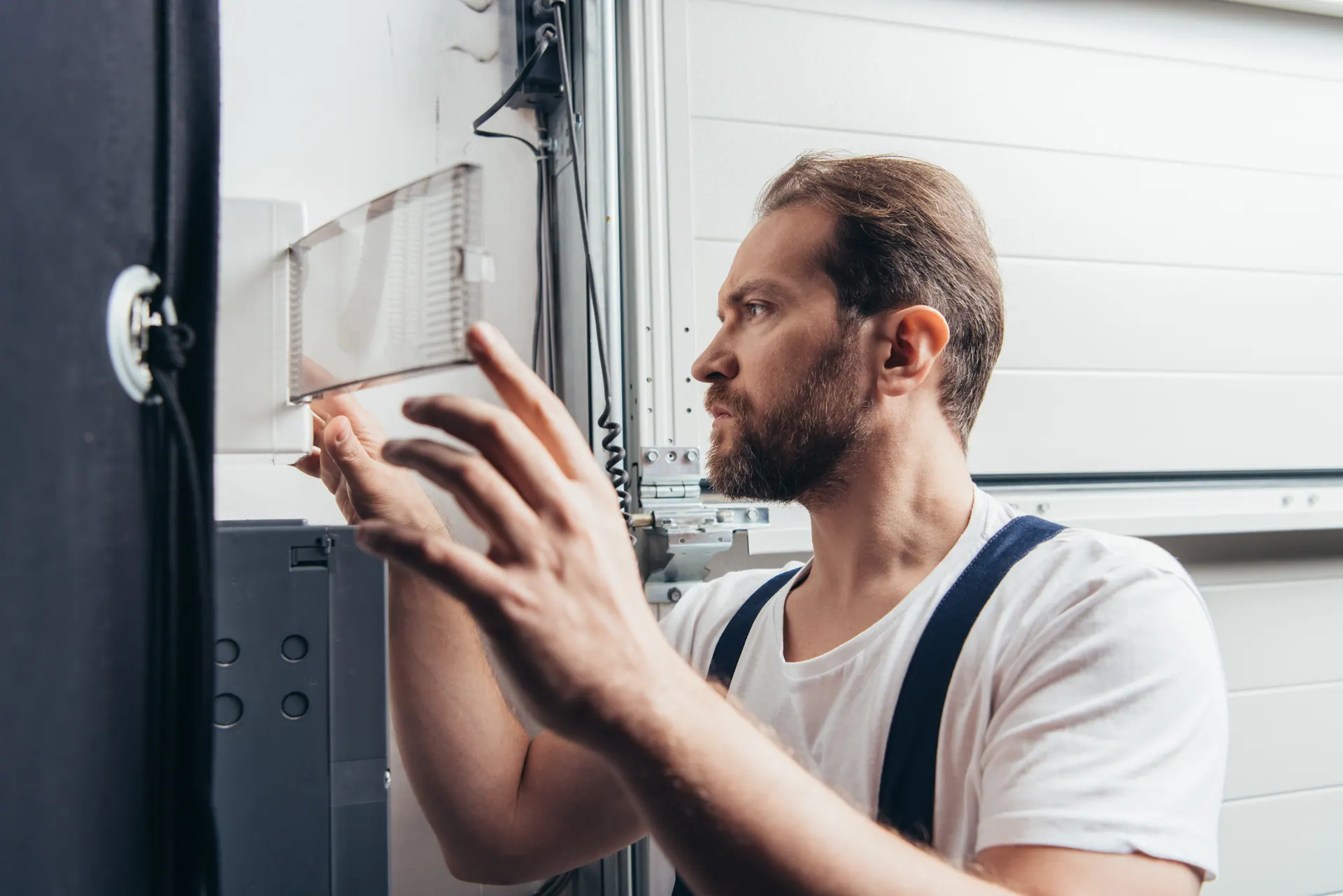
Fixing the part that failed is only half the job. Before we leave, we run the door through a set of checks that catch the next problem before it strands you. We disconnect the opener and lift the door by hand to test balance: a properly set door should hold steady about halfway up without drifting. If it creeps down or flies up, the springs need adjustment so the opener is not doing work it was never designed to do. Balance is the single best indicator of spring health, and it takes only a minute to check.
Next we look at the hardware. We tighten loose lag screws on track brackets, check hinge screws on every section, inspect rollers for wobble and flat spots, and look closely at the cable ends where they meet the bottom brackets. We apply a light garage door lubricant to hinges, roller bearings, springs and the opener rail where appropriate. We keep grease out of the tracks themselves, because grease in a track collects dirt, leaves and grit, which wears rollers faster. Small fixes like these, done during an Elm Grove repair visit, prevent a lot of future breakdowns.
Finally, we test the safety features. The photo eye sensors must stop and reverse the door when the beam is broken, and the opener must reverse when the door meets resistance on the way down. We adjust force and travel limits so the door closes fully without slamming or straining. Then we clean up the work area and walk you through what we did, what we noticed, and anything worth watching over the next year. We also confirm the manual release works, so you can open the door by hand if the power goes out during a storm.
Manual balance test with opener disconnected
Hinge and track bracket fasteners tightened
Rollers and bearings inspected for wear
Cable ends and bottom brackets examined
Moving parts lubricated, tracks kept clean
Photo eyes and auto-reverse tested
Homeowner Safety
What You Can Do Safely, and What to Leave Alone
There are a few simple things a homeowner can do while waiting for a repair. Check that the photo eyes near the floor are clean and pointed at each other, since a bumped sensor is one of the most common reasons a door refuses to close. Make sure nothing is sitting in the door path. Look at the wall button and remote batteries. If the opener has lost power, check the outlet and the breaker before assuming the motor is dead. On snowy Elm Grove mornings, also check that ice has not frozen the bottom seal to the floor before pressing the button.
Some parts of a garage door are genuinely dangerous to work on without training. Torsion springs, extension springs, lift cables, cable drums and the bottom brackets all hold or transfer hundreds of pounds of stored force. Loosening the wrong bolt on a bottom bracket or trying to wind a spring with screwdrivers can cause the hardware to release violently. Serious injuries from these parts happen every year, and the tools and training needed to do it safely are specific to this trade. Trained technicians use proper winding bars, clamps and a set procedure every single time for good reason.
If your door is stuck, crooked, or has a loud bang followed by a door that will not lift, stop using the opener. Running the motor against a broken spring or slipped cable can bend tracks, crack panels and burn out the opener. Leave the door where it is if possible, keep people and pets clear of it, and give us a call. We will tell you whether it is safe to park outside for the night and when we can get there. Anywhere in Elm Grove, a quick description of the problem over the phone helps us plan the right fix.
Our process
How we handle garage door repair
1
Tell Us What Happened
Call and describe the symptoms: the noise, the movement, what the door was doing when it stopped. A few details help us guess the likely cause, bring the right parts, and tell you whether the door is safe to use before we arrive.
2
On-Site Diagnosis
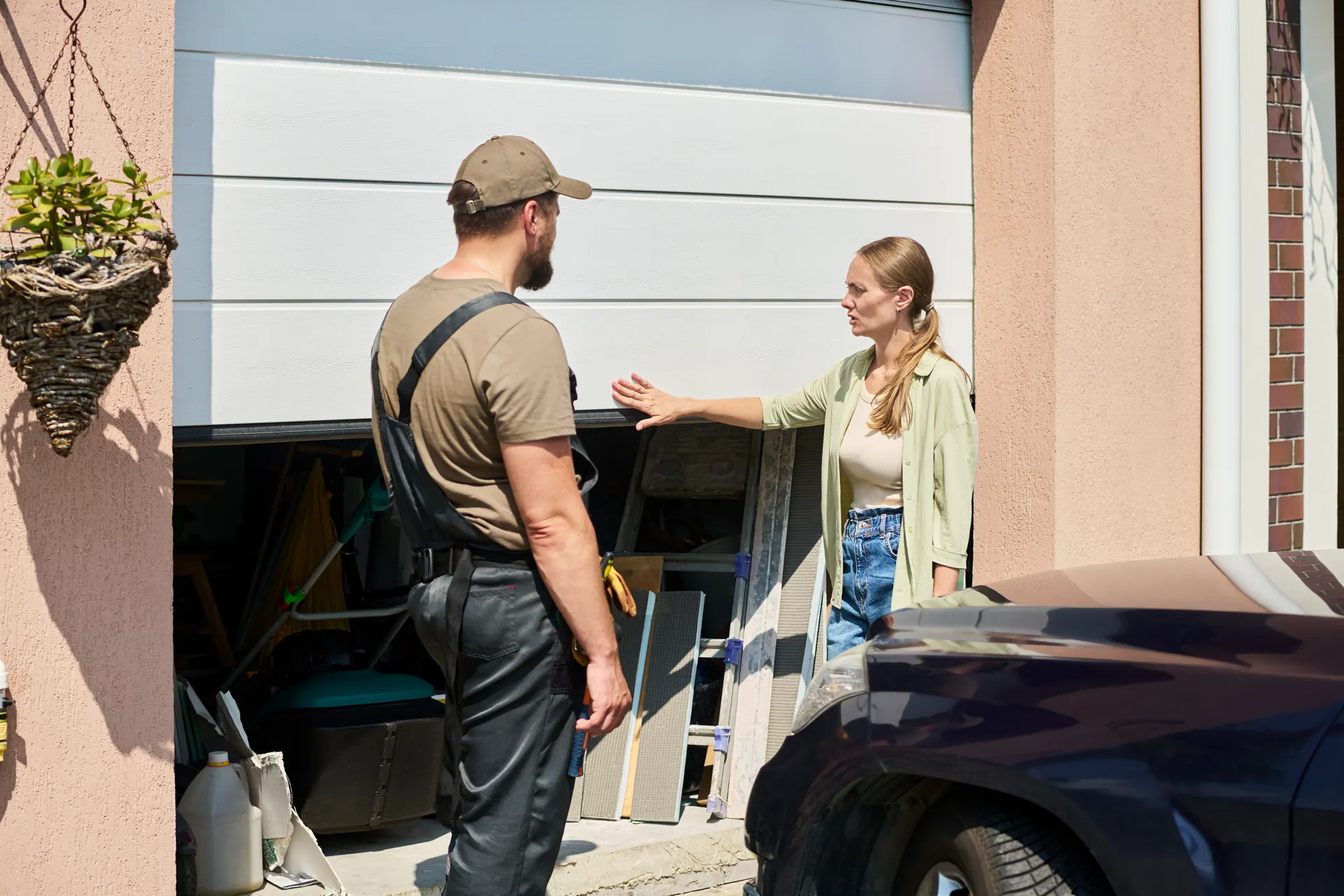
We inspect springs, cables, rollers, hinges, tracks and the opener, test the door's balance by hand, and pinpoint what failed and why. You get a clear explanation of what we found, including anything else that is worn and worth knowing about.
3
Quote Before Work
We give you the price before any work starts, with options when there is more than one reasonable way to fix the problem. You decide what to do. Nothing gets replaced without your go-ahead, and there are no surprises on the final bill.
4
Repair, Test, Clean Up
We make the repair, adjust balance and opener settings, lubricate the moving parts, and test the photo eyes and auto-reverse. Then we clean up the work area, haul away old parts, and show you the door running the way it should.
Pricing, explained
What affects the cost
01
Which Parts Failed
A single roller or hinge is a quick fix, while a full set of springs or cables involves more parts and labor. Many repairs bundle naturally, such as replacing both springs together, because the matching part is usually close to failing as well.
02
Door Size and Weight
A heavy double-wide insulated door or a solid wood carriage-style door needs larger springs, heavier cables and sometimes stronger hardware than a light single steel door. Weight drives part sizing, and part sizing affects the price of the repair.
03
Secondary Damage
Running an opener against a broken spring or slipped cable can bend tracks, crack hinges or stress panels. A repair that also needs track straightening or section work costs more than catching the original problem early, which is a good reason to stop using the door.
04
Age and Parts Availability
Common hardware is easy to source and often on the truck. Older or less common doors may need specialty brackets, odd-size springs or discontinued panels, which can take more time to track down and fit properly to the existing door.
Local to Elm Grove
Repairing Doors on Elm Grove's Older Garages
A lot of Elm Grove homes went up in the postwar building boom, and many garages still have framing, headroom and openings sized for that era. Some have been fitted with heavier insulated doors over the years, which can leave original track brackets and jambs working harder than intended. We check how the door is attached to the building, not just the door itself. The village's mature trees add their own wear: leaves and seed pods pack into the bottom of tracks each fall, sap and shade keep doors damp, and long shaded driveways hold ice well into spring. Add road salt splashing off cars on Watertown Plank Road and Bluemound Road, and the lowest hardware on a door ages fastest. A yearly look at rollers, cables and seals goes a long way here.
Most single-part repairs, like a roller set, a hinge, a sensor alignment or a spring replacement, are done in one visit, often within an hour or two. More involved jobs, such as replacing tracks or a damaged section, take longer. If we need to order a part that is not on the truck, we secure the door so it is safe and come back once the part arrives.
Is it safe to keep using my door if it is noisy?
A noisy door is usually still safe to use for a short while, but noise is a warning that something is wearing. If the noise came on suddenly, or the door is moving unevenly, stop using the opener and have it checked. Running a door with a failing part tends to spread the damage to rollers, tracks and the opener itself.
Can you repair a door that was hit by a car?
Often, yes. Bumper damage usually bends one or two sections and may knock a track out of alignment. Depending on the severity, we can straighten or replace the track and swap the damaged sections if matching panels are available. If the door is older and matching sections are discontinued, we will explain the options, including replacing the door if that makes more sense.
Do you repair the opener as well as the door?
Yes. We work on chain, belt and screw drive openers, along with wall buttons, keypads, remotes and safety sensors. Before working on the opener, we check that the door itself is balanced, because a heavy or binding door is one of the most common reasons openers strip gears, burn out boards or stop responding. Many opener problems turn out to be door problems underneath.
Should I lubricate my garage door myself?
Light lubrication is a reasonable homeowner task. Use a garage door lubricant, not a heavy grease, on hinge pivots, roller bearings and the springs, two or three times a year. Avoid greasing the inside of the tracks, since that collects grit. If the door is still loud after lubrication, the rollers or hinges are likely worn and need replacing. Wipe off any excess so it does not drip onto cars or the floor.
How do I know if I need a new door instead?
Consider replacement when sections are rusted through, rotted, badly dented or cracked, or when repair costs are piling up on an older uninsulated door. If the panels are sound, repairs are usually the better value. We will give you an honest read on the door's condition and a repair quote first, so you can compare. Many Elm Grove homeowners also weigh insulation and curb appeal when making that call.
Tell us what your door is doing and we will help you figure out the next step. Same-day service is often available when you call early, and you will have a clear quote before we start.